
India vs Pakistan T20 World Cup: India Dominate in Colombo as No-Handshake Moment Sparks Debate
Colombo, Sri Lanka — In one of cricket’s most anticipated fixtures, the India national cricket team delivered a commanding performance against the Pakistan national cricket team at the ICC Men’s T20 World Cup 2026, securing a 61-run victory at the iconic R. Premadasa Stadium in Colombo.
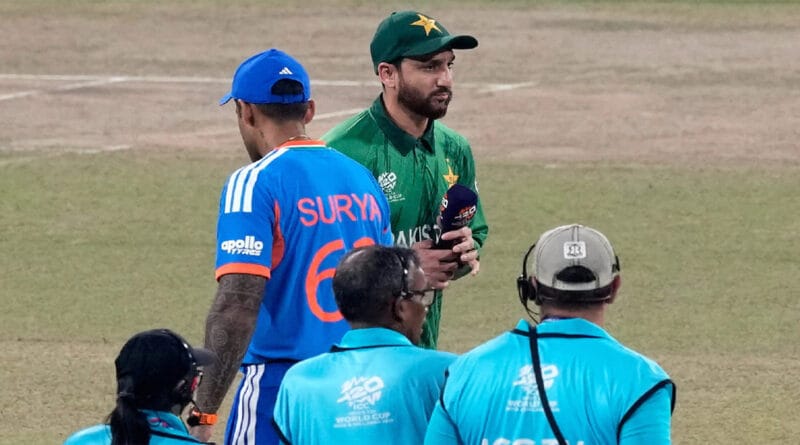
But while the cricket was decisive, a brief moment before the first ball — the absence of a handshake at the toss — became one of the most discussed aspects of the evening.
Quick Match Summary
- Match: India vs Pakistan, ICC Men’s T20 World Cup
- Venue: R. Premadasa Stadium, Colombo
- Result: India won by 61 runs
- India Score: 175/7 (20 overs)
- Pakistan Score: 114 all out (18 overs)
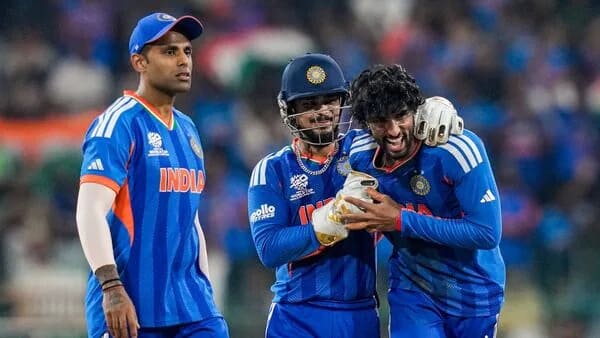
- Key Performer: Ishan Kishan (aggressive top-order innings)
The No-Handshake Moment: What Happened?
At the toss, India captain Suryakumar Yadav and Pakistan captain Salman Ali Agha did not exchange the customary handshake.
Why is this significant?
In cricket, a handshake at the toss is traditionally viewed as a gesture of mutual respect. Its absence in a high-profile India-Pakistan encounter naturally triggered conversation.
While neither board issued a formal statement, observers interpreted it as part of the broader diplomatic strain between the two nations — a reminder that this rivalry often carries political undertones alongside sporting intensity.
Importantly, once the match began, the contest itself remained competitive and professional.
India’s Batting: Controlled Aggression
After Pakistan chose to field first, India approached their innings with calculated intent.
Key Factors Behind India’s 175/7:
- Positive Powerplay Approach – Early boundaries relieved scoreboard pressure.
- Middle-Overs Acceleration – Smart rotation against spin.
- Fearless Strokeplay – Ishan Kishan attacked Pakistan’s spin-heavy strategy.
Kishan’s innings stood out not just for its pace, but for its timing. On a surface offering grip and bounce variation, he picked his moments expertly rather than swinging recklessly.
India’s total of 175 proved above par given the conditions.
Pakistan’s Chase: Where It Slipped
Chasing 176 in a pressure game is never straightforward. Pakistan’s innings faltered due to:
- Early wickets disrupting momentum
- Lack of sustained partnerships
- Rising required run rate after the 10-over mark
- Disciplined Indian bowling in the death overs
Once wickets fell in clusters, the chase became increasingly improbable. India’s bowlers maintained tight lines and avoided gifting boundary balls — often the difference in T20 contests.
Weather Watch: A Potential Disruptor
Leading up to the match, heavy cloud cover over Colombo created fears of rain interruptions. In T20 cricket, a minimum of five overs per side is required to produce a result.
Fortunately, despite overcast conditions, the weather held — allowing a full 40-over contest. The surface, however, retained slight moisture, assisting bowlers more than expected.
The Bigger Picture: Cricket and Symbolism
India vs Pakistan is never just another fixture. It represents:
- Historical rivalry
- Emotional investment from millions of fans
- National pride
- Intense media scrutiny
Small gestures — or their absence — gain amplified meaning in this context. Yet, what ultimately endures in record books are runs, wickets, and results.
Final Word
The Colombo clash delivered everything fans expect from an India-Pakistan encounter — tension, drama, quality cricket, and post-match debate.
In the end, however, the story that will matter years from now is simple:
India outplayed Pakistan in all departments on a global stage.
The handshake moment may trend on social media, but performances under pressure define tournaments.
And on this night in Colombo, India were unquestionably the better side.